SHARP Bites: The Future of Food Competition – Big Ideas, Brilliant Minds and Reasons to Be Optimistic
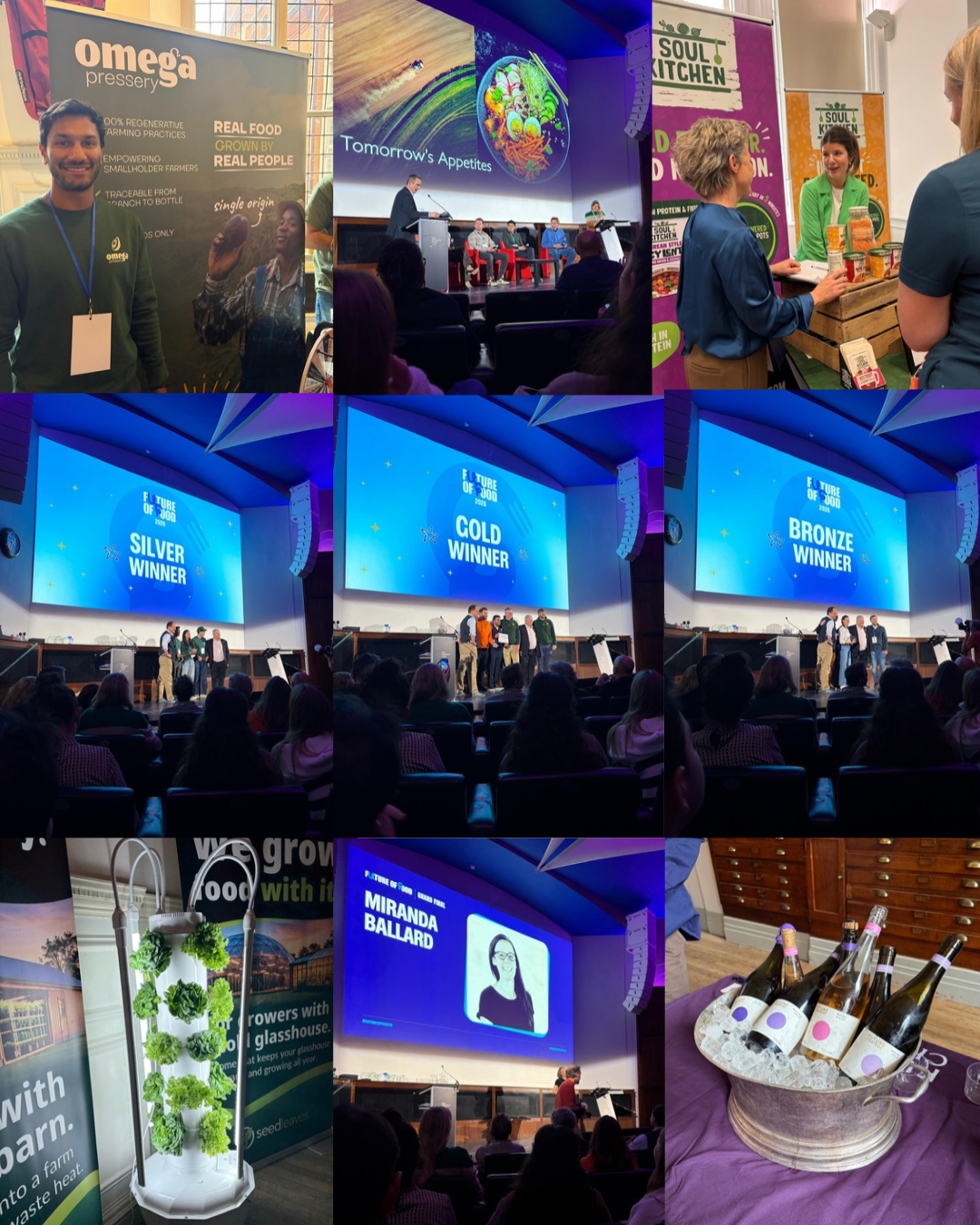
Last week, AJ and Clare headed to the National Geographic Society for the Future of Food Competition 2026 and came away feeling genuinely inspired, energised and rather optimistic about the future of our food industry.
Now in its third year, the competition attracted an impressive 241 entries, whittled down to 16 finalists, with 31 industry judges, 9 Grand Final Judges and a room full of people passionate about changing the way we produce, consume and think about food.
There’s certainly no shortage of big challenges facing our food system but spending time with entrepreneurs who are rolling up their sleeves and doing something about them was hugely refreshing.
From tackling food waste and developing more sustainable food sources to producing better-quality, more nutritious food in ways that nurture rather than deplete our environment, these are big ideas addressing big problems. Crucially, many have the potential to scale and deliver meaningful change.
And, not that we’re smug or anything, but we did correctly call the top three. We’re quietly rather pleased with ourselves!
Better food, not more food
One of the standout themes of the day was the concept of ‘joyful nourishment’ – something that really resonated with us.
Henry Dimbleby opened proceedings by exploring how AI, weight-loss drugs (GLP-1s) and increasingly accessible health diagnostics are set to fundamentally change how we shop, eat and live.
The team at Bramble Intelligence explored the idea of maximising the value of every bite, balancing the nutritional benefits of food with the joy we get from eating it. Because, quite frankly, what’s the point of creating incredibly nutritious food if nobody wants to eat it?
The message was clear: the next era of food innovation is about selling better food, not more food.
Some of the most interesting insights from The Future Panel, which included Tamara Rajah Group Managing Director of Health at Tesco, Robert Grieg-Gran ex-Mindful Chef co-founder, Andy Cato from Wildfarmed, and Dr David Huang, Director of Clinical Innovation at Voy, the UK’s largest medicated weight-loss provider, were:
- Healthier food without the compromise. Tesco highlighted that 70% of its customers want healthier options but don’t necessarily want to change their habits or pay more for them. Making everyday favourites healthier could have far greater impact than creating separate ‘healthy’ ranges.
- Delicious still wins. Whatever the nutritional credentials, sustainability story or clever technology behind a product, repeat purchase ultimately comes down to whether people enjoy eating it. Music to our ears!
- Provenance is increasingly important. Wildfarmed’s Andy Cato spoke passionately about regenerative agriculture and the potential for farming to become one of our greatest sources of biodiversity recovery.
- Personalised nutrition is gathering pace. As technology gives consumers greater insight into how their bodies respond to food, there’s a huge opportunity for brands to deliver more relevant nutritional benefits.
Wouldn’t it be wonderful if, by 2035, we no longer talked about ‘healthy food’ as a separate category because it had simply become the norm?
The winners – clever ideas with serious potential
What we particularly loved about the three winning businesses was their ability to tackle significant challenges within the existing food system. They’re not necessarily asking consumers to radically change their behaviour; they’re finding smarter ways to make the system work better.
Gold – KluraLabs
Taking both the judges’ top prize and the popular vote, KluraLabs was a clear favourite on the day. A materials innovation company that manufactures antimicrobial packaging extending shelf-life without adding to natural ingredients.
What excited us about the winner was the potential to deliver food waste savings at scale. We need innovations that can be adopted commercially, make economic sense for businesses and deliver tangible environmental benefits. The biggest impact often comes from changing what happens behind the scenes, without asking consumers to do anything differently.
Silver – Omega Pressery
We absolutely loved the ethos behind this business. Working directly with more than 2,000 smallholder farmers in East Africa, Omega Pressery produces traceable high-quality, award-winning avocado oil, giving a commercial purpose to fruit that might otherwise go to waste.
Last year alone, the business rescued four million ‘wonky’ avocados. That’s a lot of guacamole that never was!
It’s a brilliant example of how a premium consumer product can address food waste, support farming communities and create value throughout the supply chain. A genuinely compelling brand story backed up by a strong commercial proposition. We also love that they’ve collabed with SHARP client Woolf’s Kitchen resulting in a delicious Chilli Crunch with Avocado Oil launched earlier this year.
Bronze – Zest
For us, Zest was one of the most exciting propositions of the day in terms of the sheer scale of impact it could have. Did you know that seven times more food waste is generated during manufacturing than at retail and this is what spurred founder Dini McGrath on to set up Zest.
Using AI to identify and prevent food waste in real time within manufacturing facilities, Zest is tackling the problem at source. Developed with Nestlé, the technology has already helped redirect the equivalent of 500,000 meals. We love that it can equip manufacturing teams to make smarter operational decisions, protect margins and eradicate food waste.
The opportunity to roll this out across the food manufacturing industry is enormous. Less waste, greater efficiencies, better margins and a reduced environmental footprint. What’s not to love?
It’s a great example of AI being used to solve a very real problem rather than simply being shoehorned into a business proposition because it’s the buzzword of the moment.
A few more brilliant ideas worth shouting about
With just one minute for each finalist to pitch, there was an incredible amount of innovation to take in. It really did make the judges’ decision very difficult. A few others that caught our attention included:
- BlaqCat – harnessing waste heat from data centres to grow food. With the rapid expansion of AI and its associated energy demands, finding productive uses for that heat feels particularly timely.
- Bags of Taste – helping food-insecure households develop the skills and confidence to cook affordable, nutritious meals, with impressive reported long-term benefits for both health and household budgets.
- Generation Soil – collecting household food scraps and turning them into compost locally in Bristol. A wonderfully practical example of the circular economy in action and we loved listening to audio clips of soil that has been stripped of its nutrients versus soil that is teeming with microbes!
- Microbz – similarly these guys are working with British farmers to take their brewed soil microbes to market as an alternative to synthetic inputs.
- Future Château – tapping into the moderation movement with a lighter, lower-alcohol, lower-calorie wine. A clever example of considered indulgence that doesn’t take the pleasure out of drinking wine.
- Soul Kitchen – forget pot noodles, Bella Acland came up with the idea of making nutritious, protein- and fibre-rich lentil lunches genuinely convenient while she was a student. You may have seen her pitching on Dragon’s Den where she won investment from Susie Ma. Proof that convenience food doesn’t have to mean compromising on nutrition.
What struck us was the sheer breadth of innovation, from soil health and marine biodiversity to alternative ingredients, packaging, manufacturing technology and accessible nutrition.
Not every solution needs to be a ground-breaking new piece of technology. Sometimes it’s about looking at something we already have and finding a much better way to use it.
AI – are we ready for what’s coming?
We couldn’t possibly round up the day without mentioning AI. It was a recurring theme throughout, and Miranda Ballard’s dynamic keynote certainly gave us plenty of food for thought.
She took us through the journey of a fictional food entrepreneur – in the guise of the brilliant Future of Food founder Barney Mauleverer – demonstrating how AI agents could potentially manage everything from packaging compliance, finance and retailer pitches to stock control, fundraising and international expansion.
Perhaps most thought-provoking for us as food and drink PR and communications specialists was the demonstration of AI creating a supermarket shopping basket from a simple conversational prompt.
What happens when consumers no longer browse supermarket shelves or even scroll through online grocery listings? When traditional promotions, packaging and shelf positioning can be bypassed altogether?
How do brands ensure they’re the ones being recommended by AI?
It raises some fascinating questions about brand discovery, visibility, reputation and trust. Having a great product and a compelling, credible story could become more important than ever.
Miranda also made a brilliant point about the real gift of AI being time. Time to think, to innovate, to explore ideas and to do the things we’ve been talking about doing for years.
And who wouldn’t welcome a few extra hours in the day?
The future of food is in good hands
Working with entrepreneurial food and drink businesses every day at SHARP, we’re constantly reminded of the passion, determination and sheer tenacity it takes to challenge the status quo.
What we loved about the Future of Food Competition was seeing so many people applying that entrepreneurial spirit to challenges that desperately need solving – and doing so with commercially viable, scalable ideas.
Sustainability and profitability shouldn’t be mutually exclusive. Nor should nutrition and deliciousness. The exciting businesses are the ones finding ways to marry the two.
There’s a huge amount of work to be done, but if the calibre of entrepreneurs in that room is anything to go by, there’s also an awful lot to be excited about.
A huge congratulations to all the finalists and winners, and to the Future of Food team for bringing together such an inspiring community of people.
We’ll certainly be keeping an eye on these businesses.
And yes, we’ll be putting our judging skills to the test again next year! Barney, if you need new judges, you know where to find us!